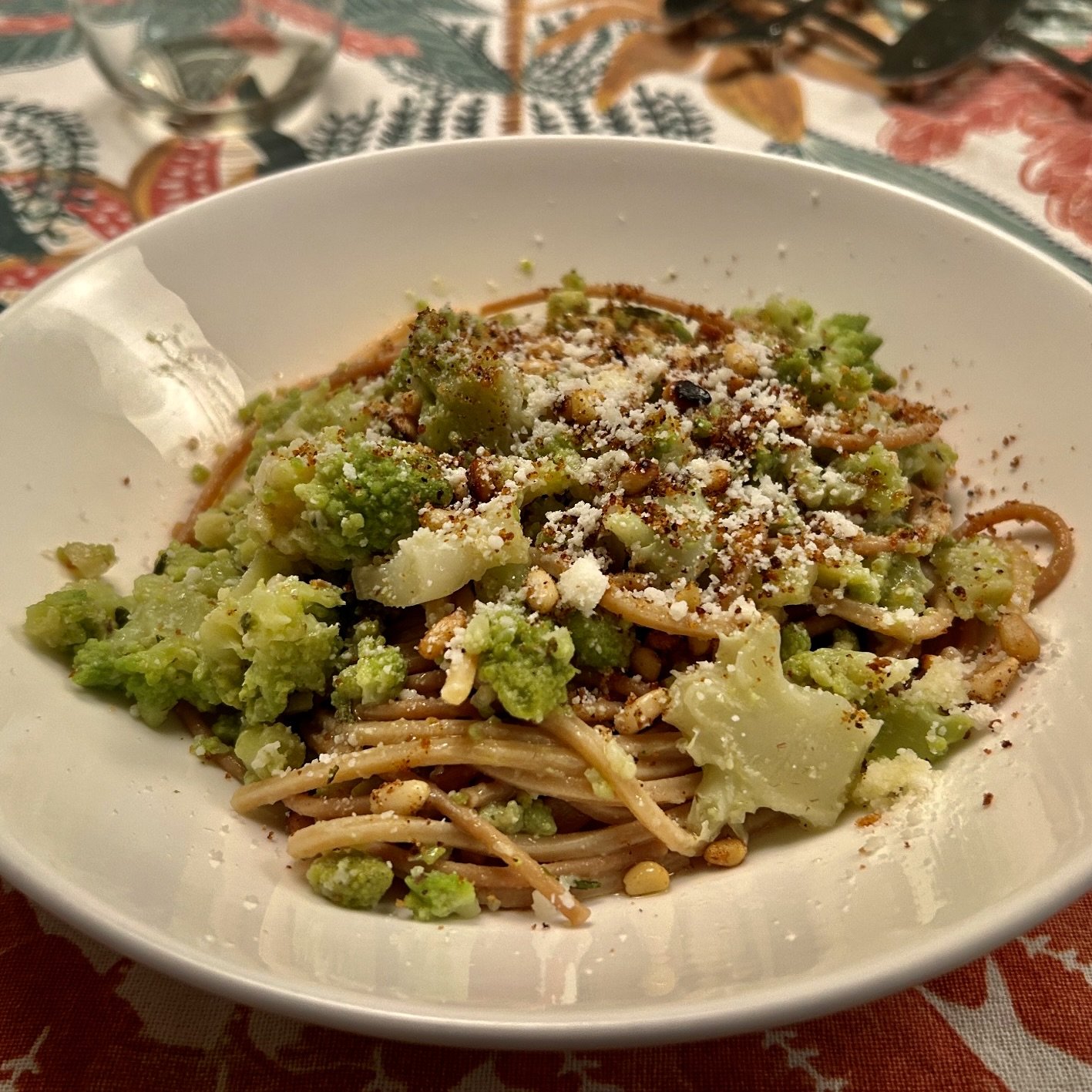
Whole Wheat Spaghetti with Romanesco Broccoli, Pine Nuts & Toasted Breadcrumbs
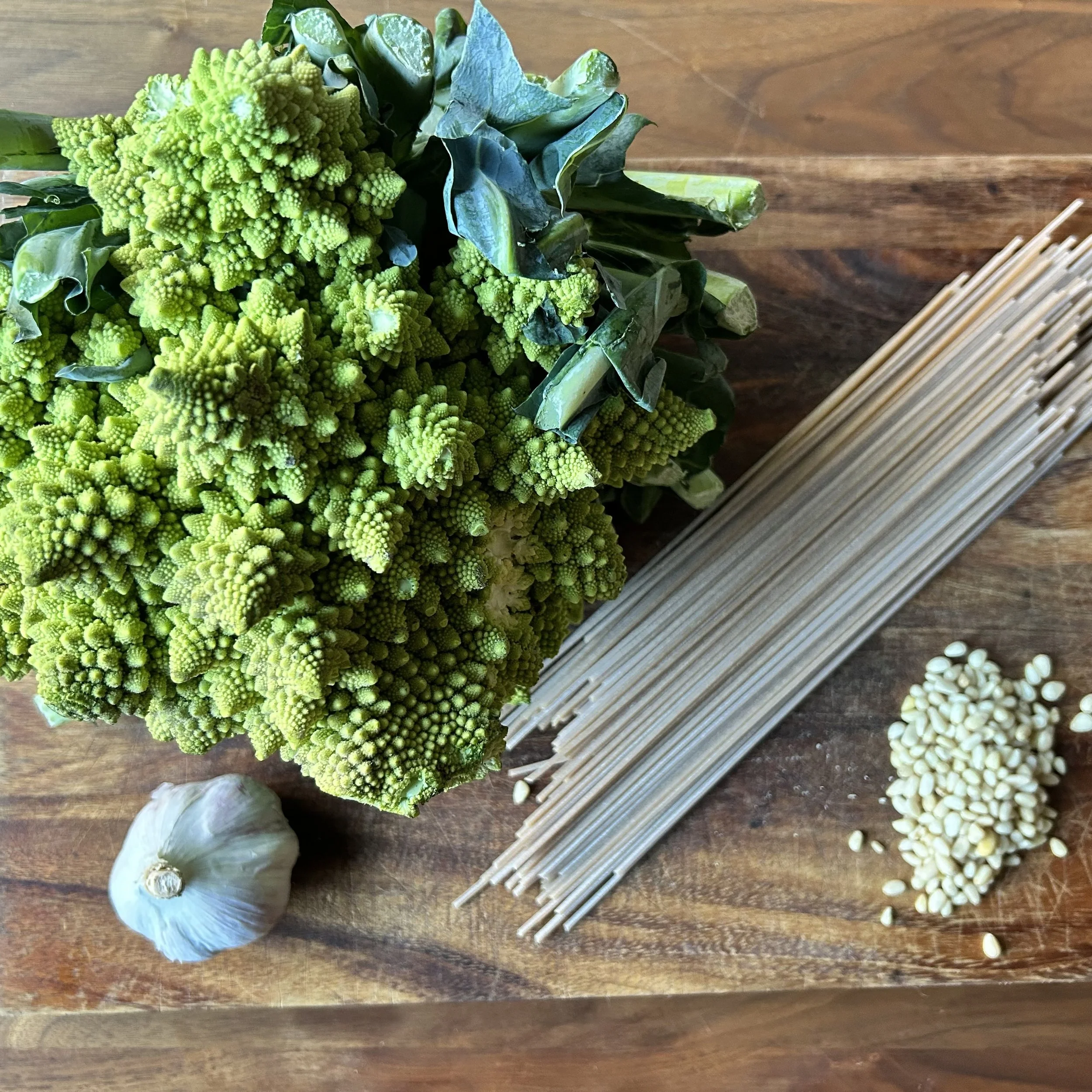
Romanesco broccoli is one of those vegetables that almost looks too beautiful to eat: with its bright green colour and extraordinary spiral-shaped florets, it resembles something between a cauliflower and a little Christmas tree. It's also a lovely example of the geometric patterns found in nature even if it looks like an alien!
Despite its rather exotic appearance, broccolo romanesco is a humble vegetable, particularly popular in Central Italy during the cooler months. Its flavour is delicate, slightly sweet and nutty, somewhere between broccoli and cauliflower.
I love using it in pasta dishes, where some of the florets can be gently crushed to create a creamy sauce while others retain their shape and a little bite. In this recipe, I pair it with toasted pine nuts, garlic, a little rosemary and crunchy breadcrumbs. I also like adding a couple of anchovy fillets for extra depth of flavour, and chili flakes, but they're entirely optional.
I prefer whole wheat spaghetti for this dish. Its slightly earthy, nutty flavour works beautifully with the Romanesco, although regular spaghetti will be just as delicious.
4 servings
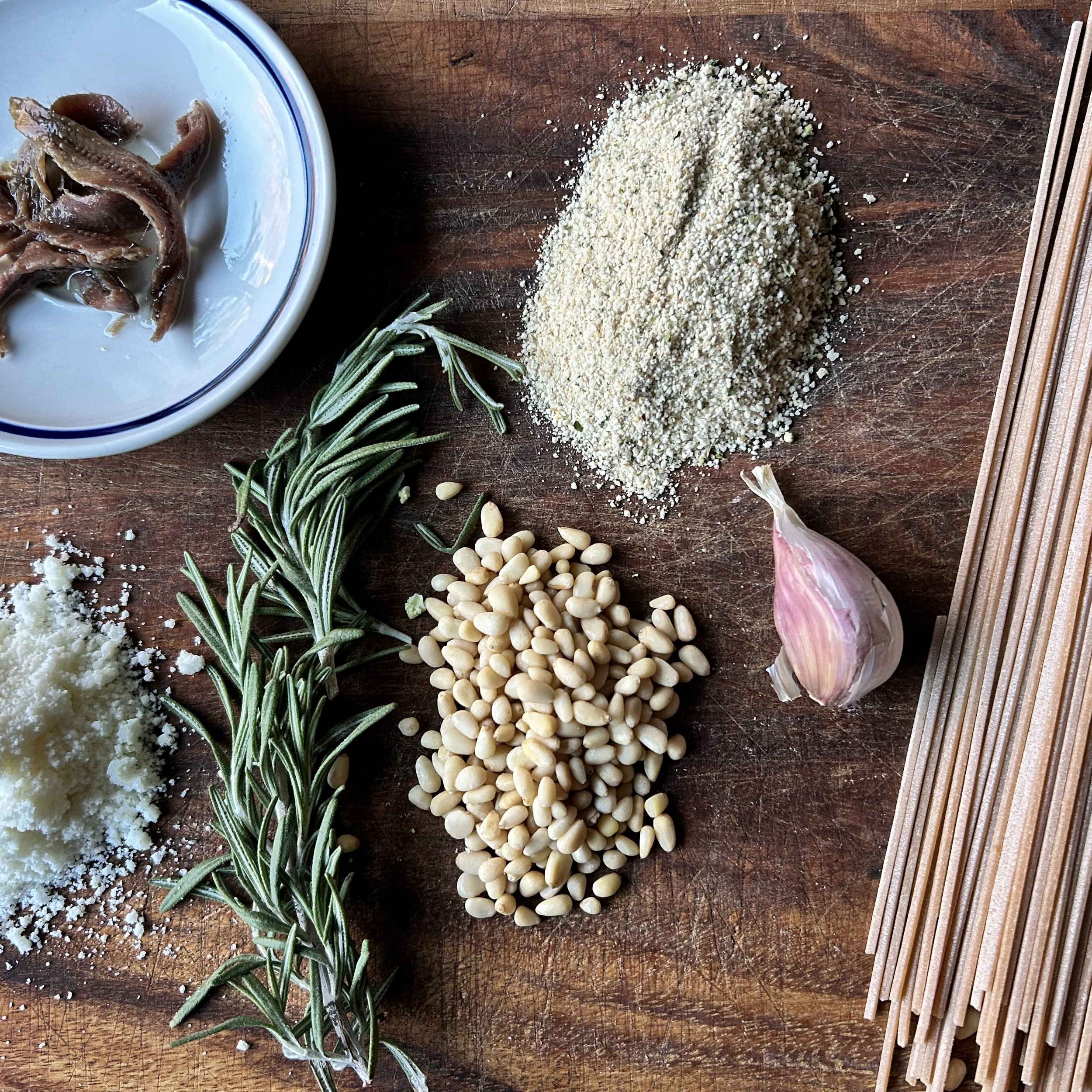
Ingredients
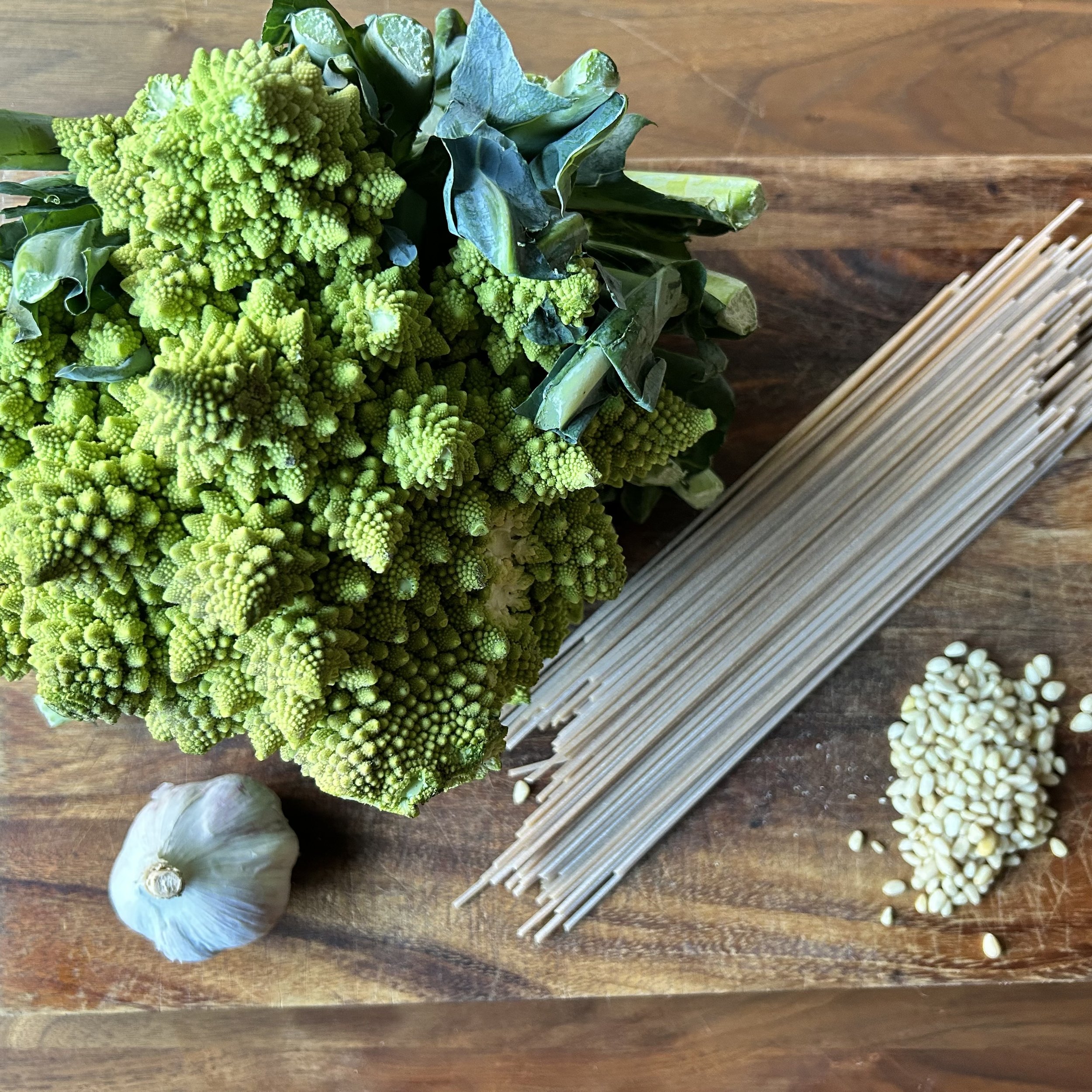
350 g whole wheat spaghetti (or spelt or regular spaghetti)
1 medium Romanesco broccoli (approximately 700–800 g)
40 g pine nuts
2 garlic cloves, lightly crushed
3–4 anchovy fillets in olive oil (optional)
1 small sprig fresh rosemary, finely chopped
4–5 tbsp extra virgin olive oil, plus extra for serving
3 tbsp breadcrumbs
40 g grated Pecorino Romano or Parmigiano Reggiano
Salt and freshly ground black pepper
A pinch of dried chili flakes (optional)
Preparation
1. Wash the broccoli and separate it into small florets, cutting any larger ones into bite-sized pieces. Don't discard the tender part of the stalk; peel and chop it into small pieces.
2. Bring a large pot of salted water to a boil. Add the romanesco and cook for approximately 5–7 minutes, until tender but not mushy. Remove with a slotted spoon, reserving the cooking water for the pasta.
3. In a dry frying pan, lightly toast the pine nuts over medium-low heat until golden. Remove and set aside. In the same pan, add a little olive oil and toast the breadcrumbs with half the chopped rosemary until golden and crispy. Set aside.
4. Next, prepare the sauce: in a large frying pan, gently heat 3–4 tablespoons of olive oil with the garlic, remaining rosemary and chili flakes, if using. Add the anchovy fillets, if using, and stir until they dissolve into the oil. Remove the garlic once fragrant and lightly golden.
5. Transfer the cooked broccoli to the pan and sauté for a few minutes, stirring gently. Crush some of the florets with the back of a wooden spoon, leaving the others in small pieces. Add a ladle of the reserved cooking water to create a loose, creamy sauce. Season with salt and pepper, keeping in mind that the anchovies and cheese will add saltiness.
6. Bring the broccoli cooking water back to a boil and cook the spaghetti until just al dente. Reserve a mug of the cooking water before draining.
7. Transfer the spaghetti directly to the pan with the Romanesco and toss over medium heat for a minute or two, adding a little pasta water as needed. The crushed broccoli should coat the spaghetti without becoming too thick or dry. Stir in most of the toasted pine nuts.
8. Divide among four plates and finish with the remaining pine nuts, toasted rosemary breadcrumbs, grated cheese, a little freshly ground black pepper and a drizzle of good extra virgin olive oil.
Don't overcook the romanesco. The secret is to have two textures: some broccoli soft enough to coat the spaghetti and some still in distinct, tender florets.
Use the pasta water. The starch helps the crushed broccoli and olive oil come together into a creamy sauce without adding any cream.
Don't skip the toasted breadcrumbs. They add a lovely crunch and are a traditional way of finishing many simple Italian pasta dishes. For a vegetarian version, simply omit the anchovies; the garlic, rosemary, pine nuts and cheese provide plenty of flavour.