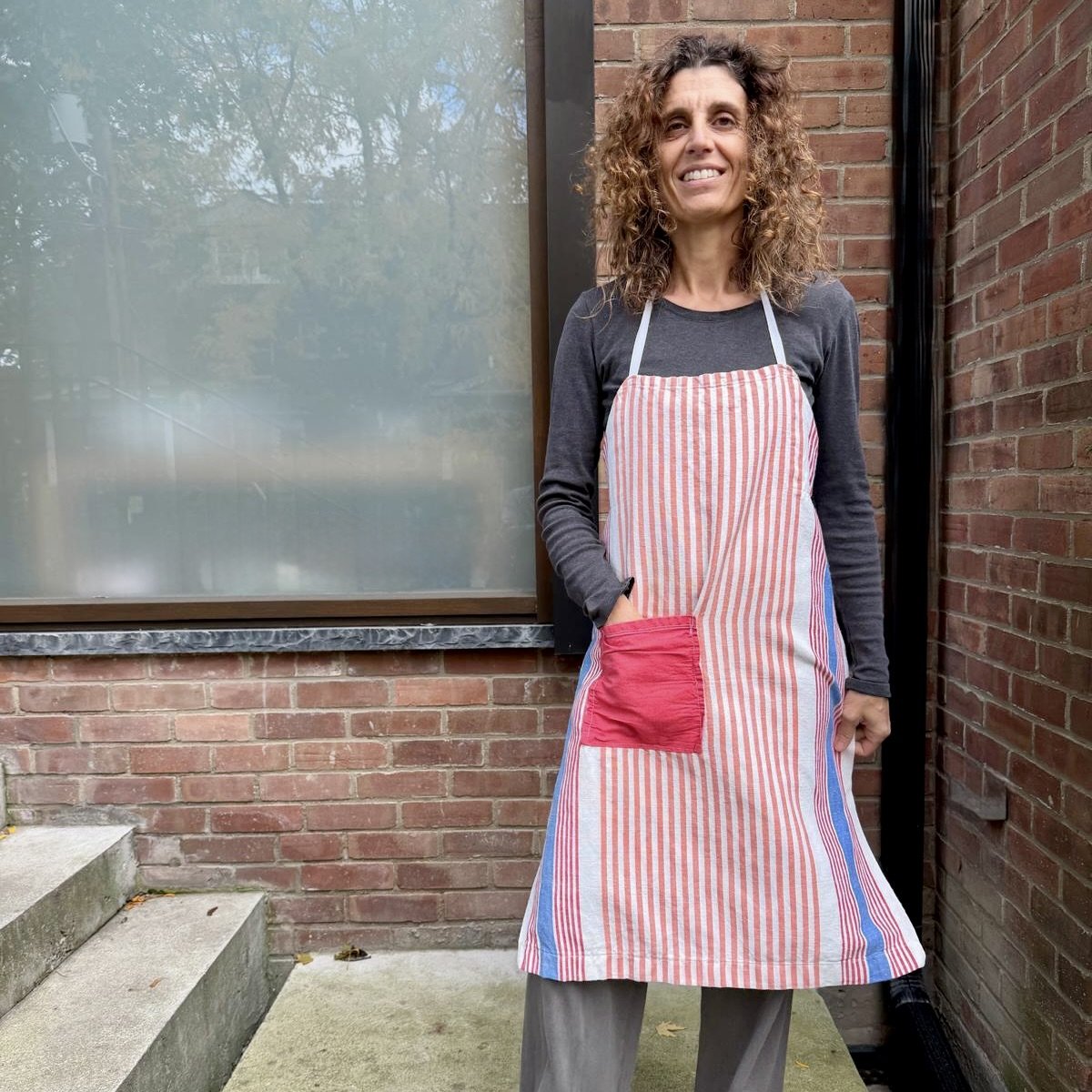
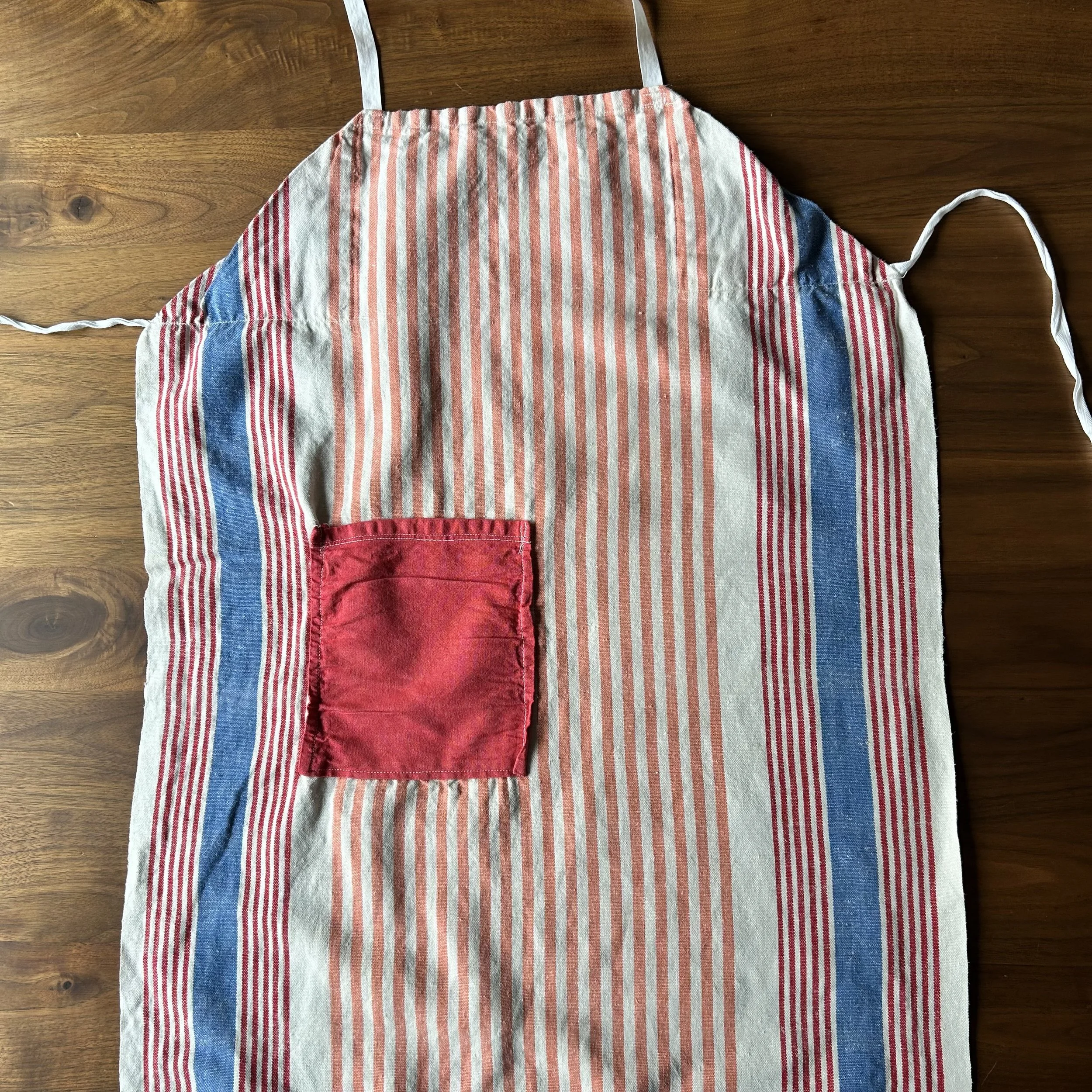
When I think about the grembiule, I don't think first about cooking.
I remember being little on our farm in Tuscany, following my nonna into the vegetable garden to find the ripest tomatoes for a pomarola. We would pick them one by one and, when our hands were full, she would lift the bottom of her apron and turn it into a basket.
I remember the same thing during vendemmia, when a few bunches of grapes would inevitably find their way into a grembiule, ready to go back to the kitchen to make Schiacciata con l'Uva.
At the time I didn't think there was anything special about it. The grembiule was simply there. Everyone had one.
Today the humble apron has had quite a transformation. Beautiful linen, perfect colours, leather straps, sometimes quite an impressive price tag. It has almost become a kitchen fashion accessory — or the perfect prop for a cooking photo. I like a beautiful apron too, but the grembiuli I remember from my childhood were a little different. They were made to work.
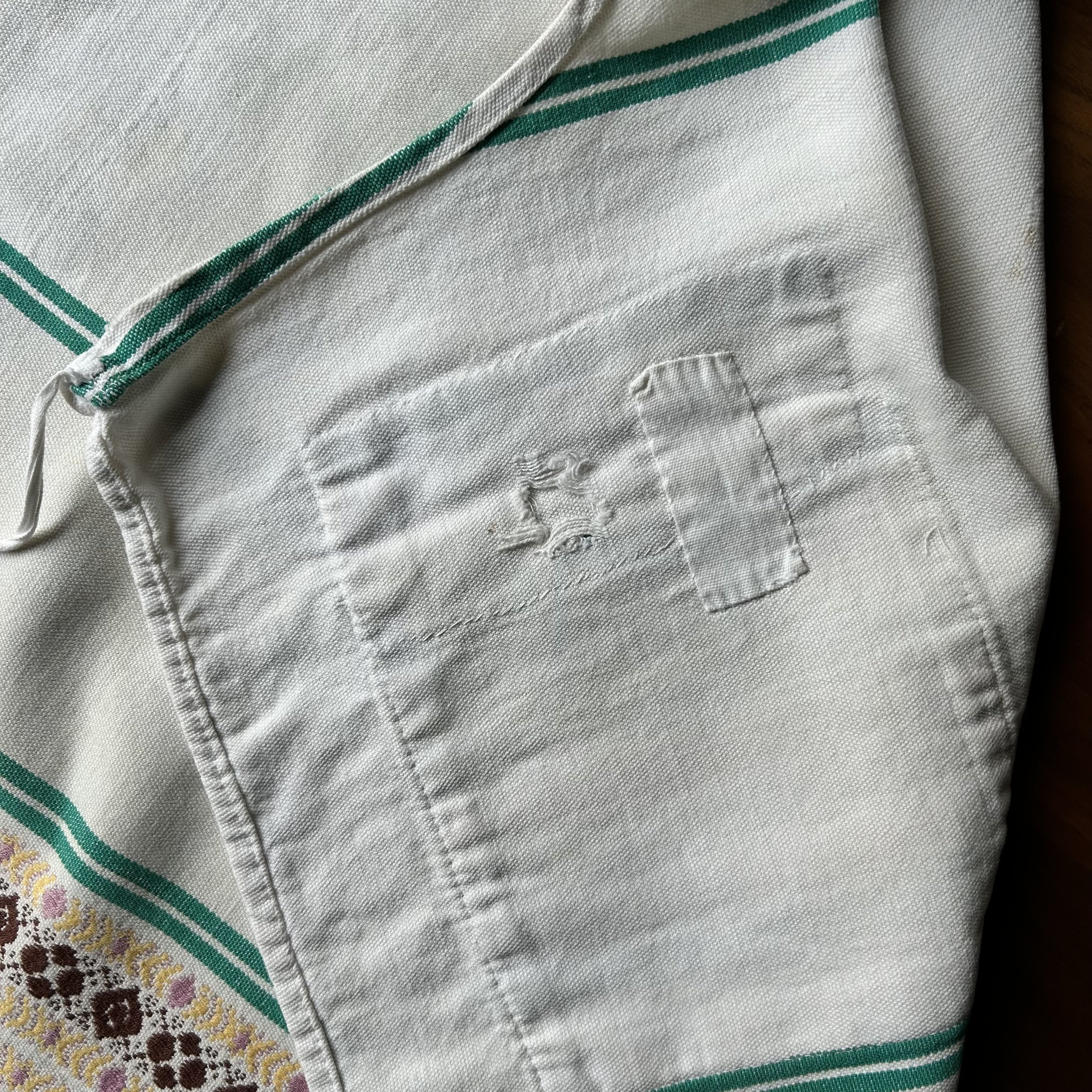
They were washed hundreds of times, stained, faded, patched. Sometimes aprons were sewn at home from fabric that was already there — even an old tablecloth that had become too worn for the table but still had plenty of life left in it.
Keeping your clothes clean was really only one of its jobs.
Hands were constantly dried on it. A corner could grab the handle of a hot pot. A knife could get a quick wipe before being put down. The pockets somehow carried everything — a handkerchief, keys, a piece of string, perhaps something picked up in the garden.
And then, of course, there was my favourite transformation: you lifted the bottom corners and suddenly your grembiule became a basket. Tomatoes, zucchini, herbs, apples, eggs from the chicken coop... whatever needed to make its way back to the kitchen.
The Italian word grembiule comes from grembo — the lap, that space in front of our body where we hold something close. An older meaning of grembo was also the fold of a garment lifted to form a hollow where things could be carried. Once you know this, the word grembiule suddenly makes perfect sense.
Apron has not always been purely humble or practical. There are beautiful old images of Italian women wearing embroidered aprons going back hundreds of years. A Tuscan print from the late 1500s, for example, shows a young contadina with a lovely decorated apron over her dress.
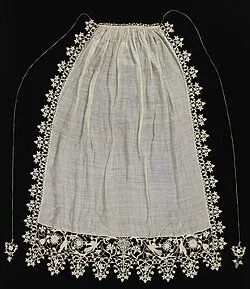

And by the early 1900s, some Italian aprons were made in delicate linen and lace — clearly not the kind you would use to carry tomatoes from the vegetable garden! So perhaps our modern love affair with the beautiful kitchen apron is not so modern after all.
The ones I love most
Still, when I look at the aprons I have collected from my own family, it is not necessarily the prettiest ones that I like the most. I like the ones that look as if they have lived. The fabric has become soft from washing. Maybe there is a stain that never completely disappeared. A pocket sits a little crooked or the colours are no longer what they once were.
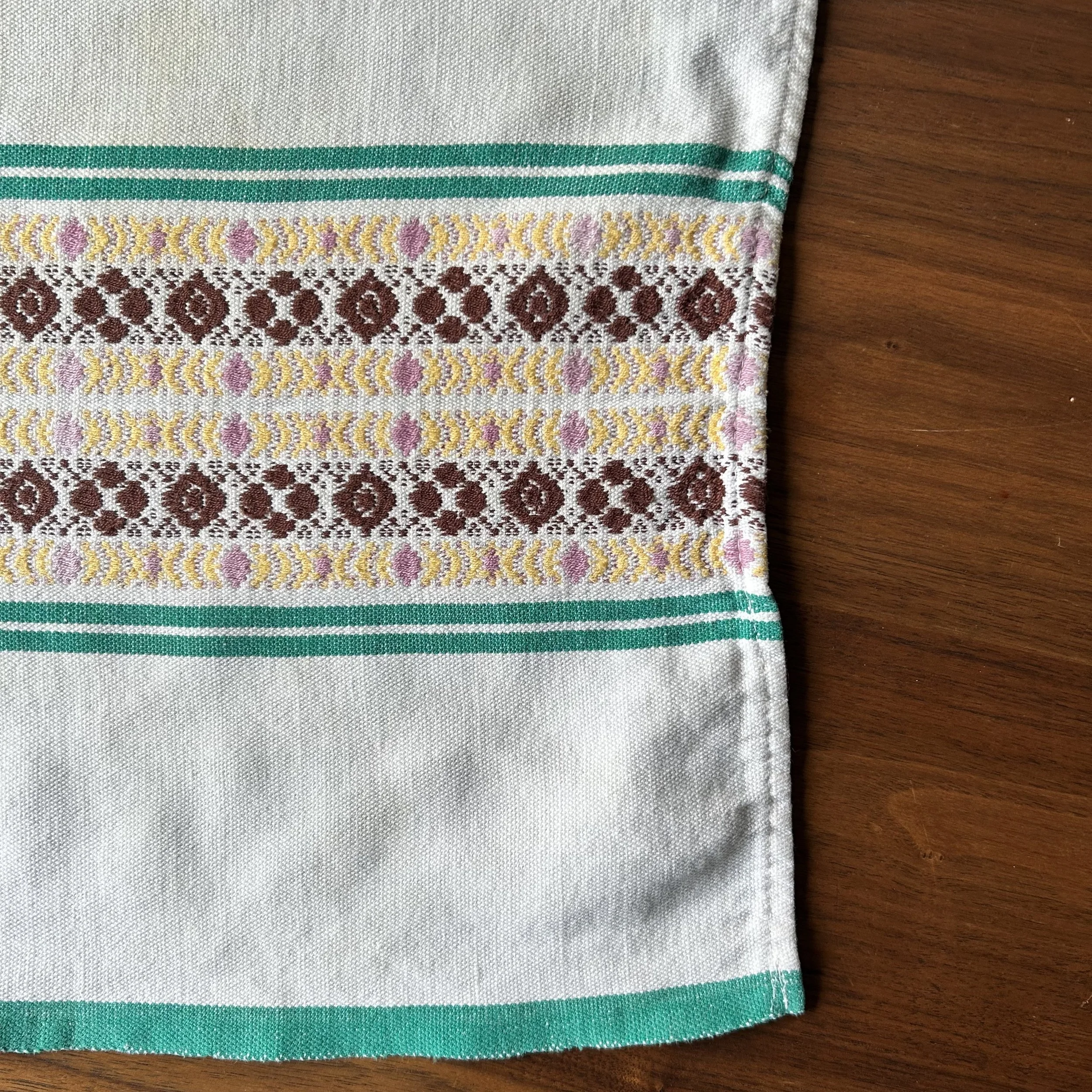
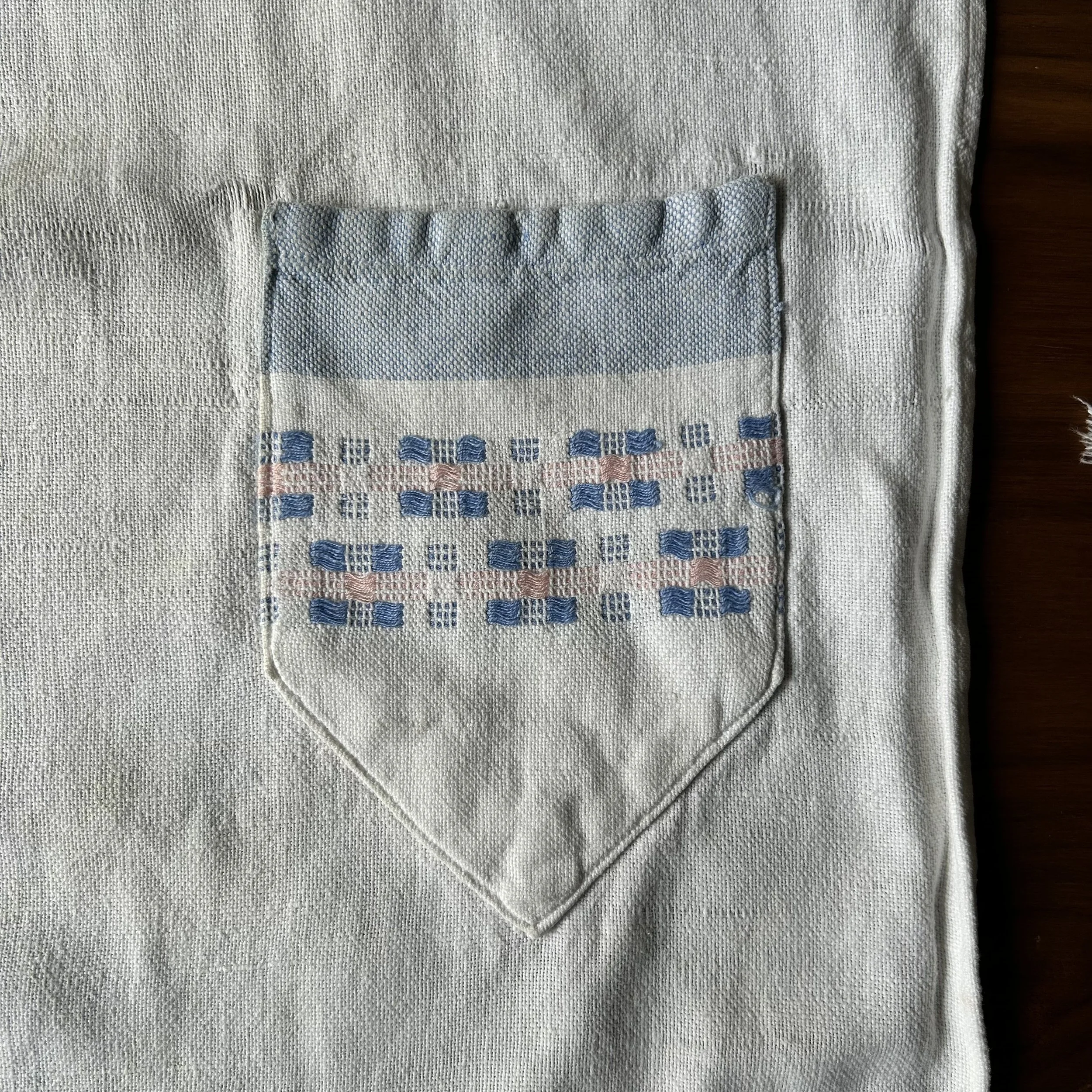
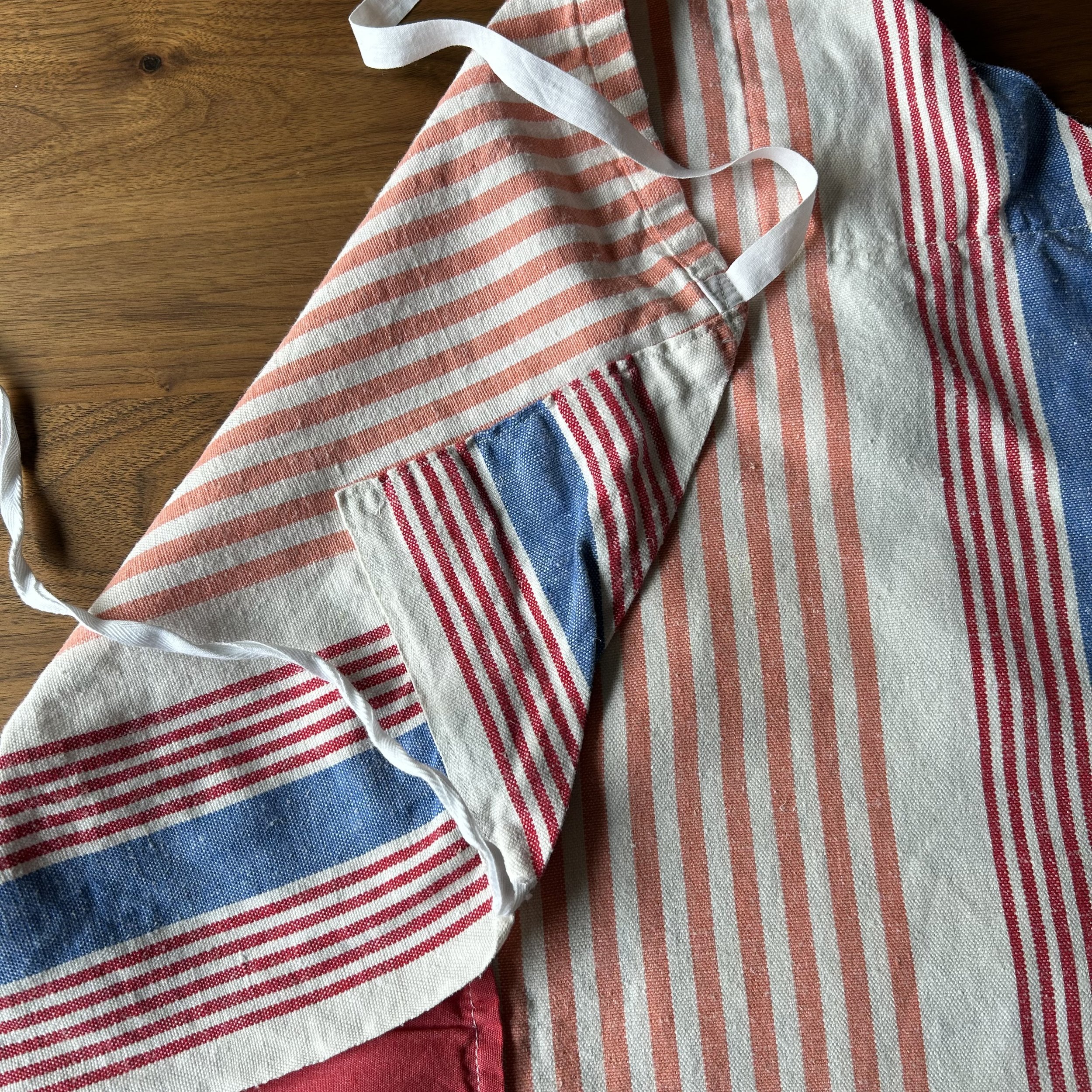
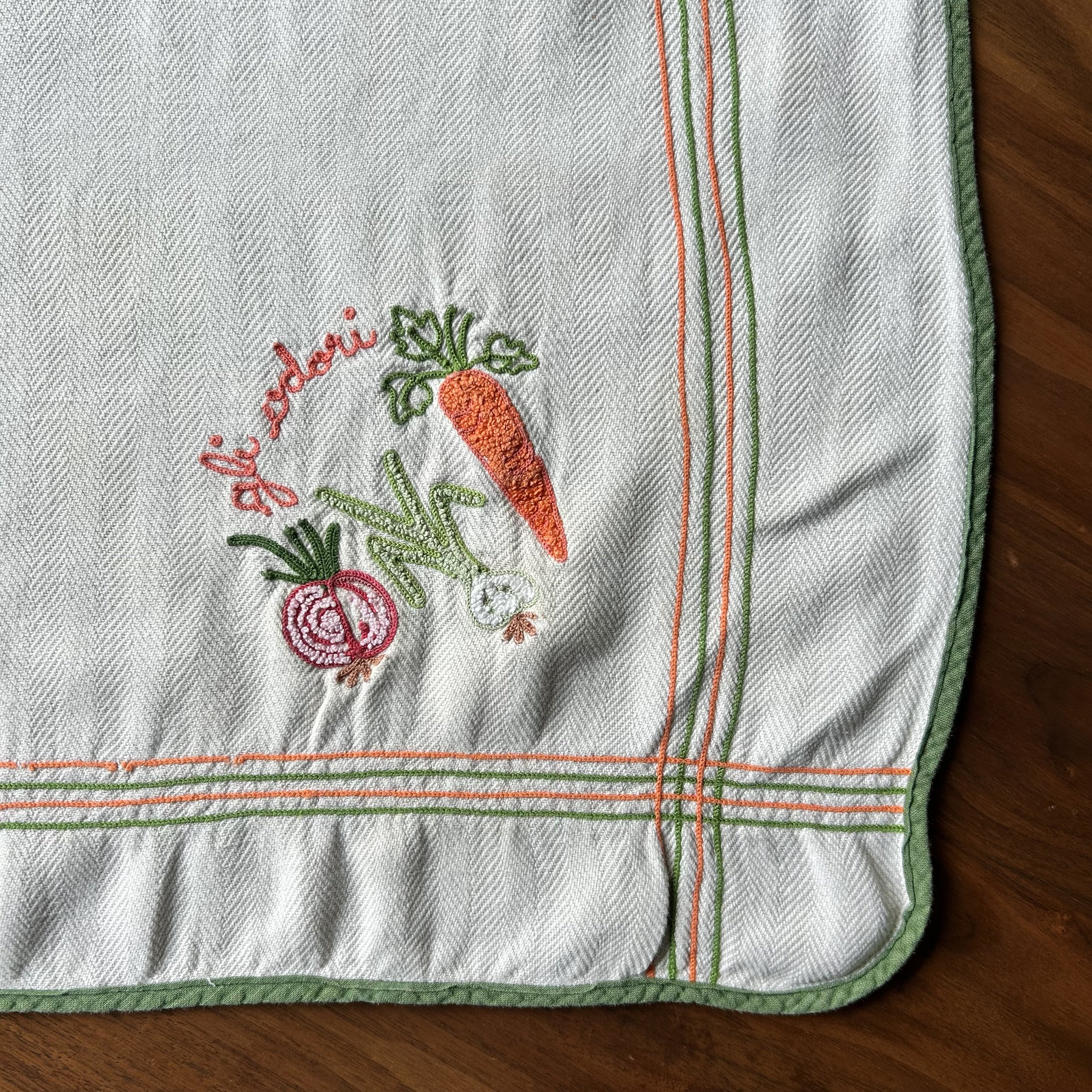
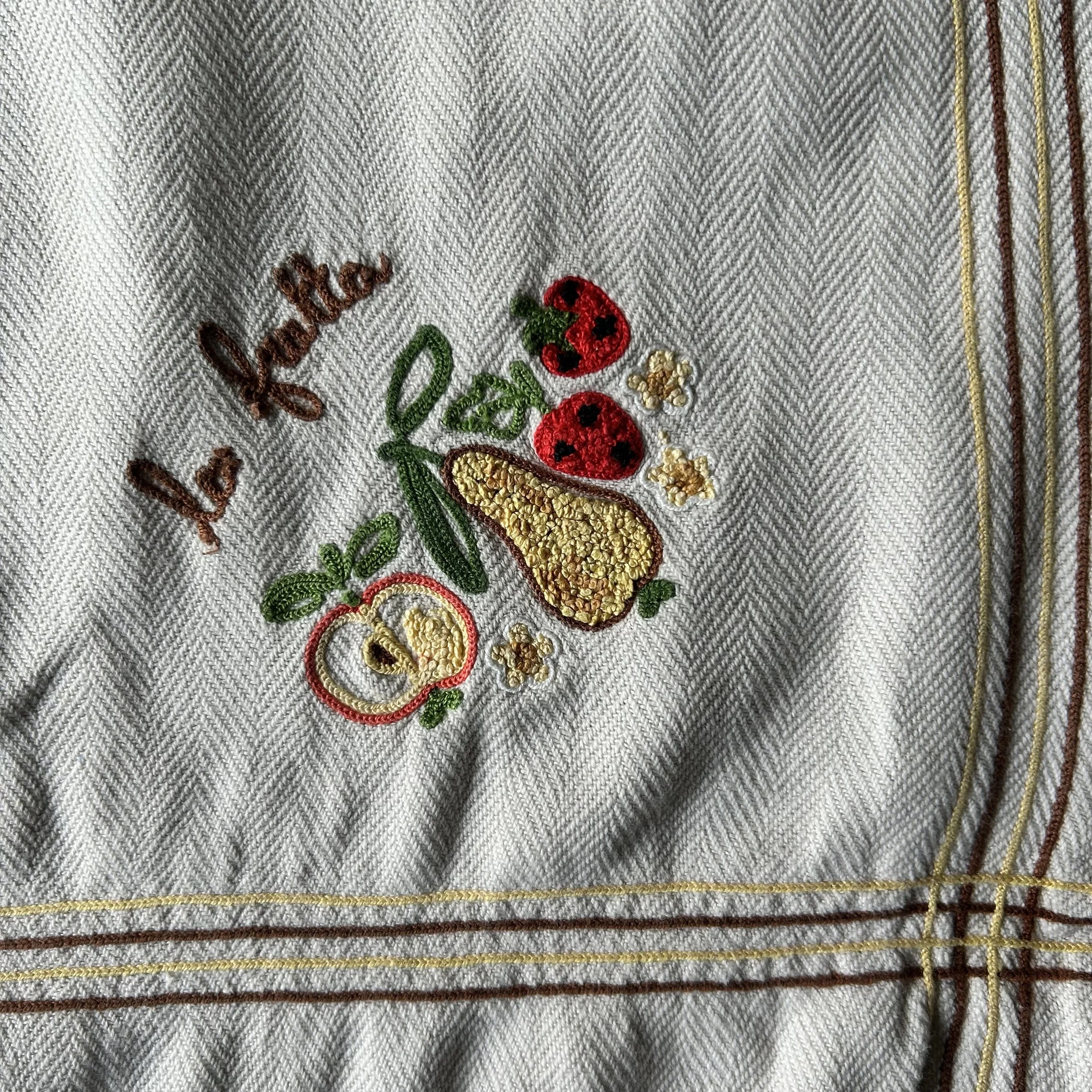
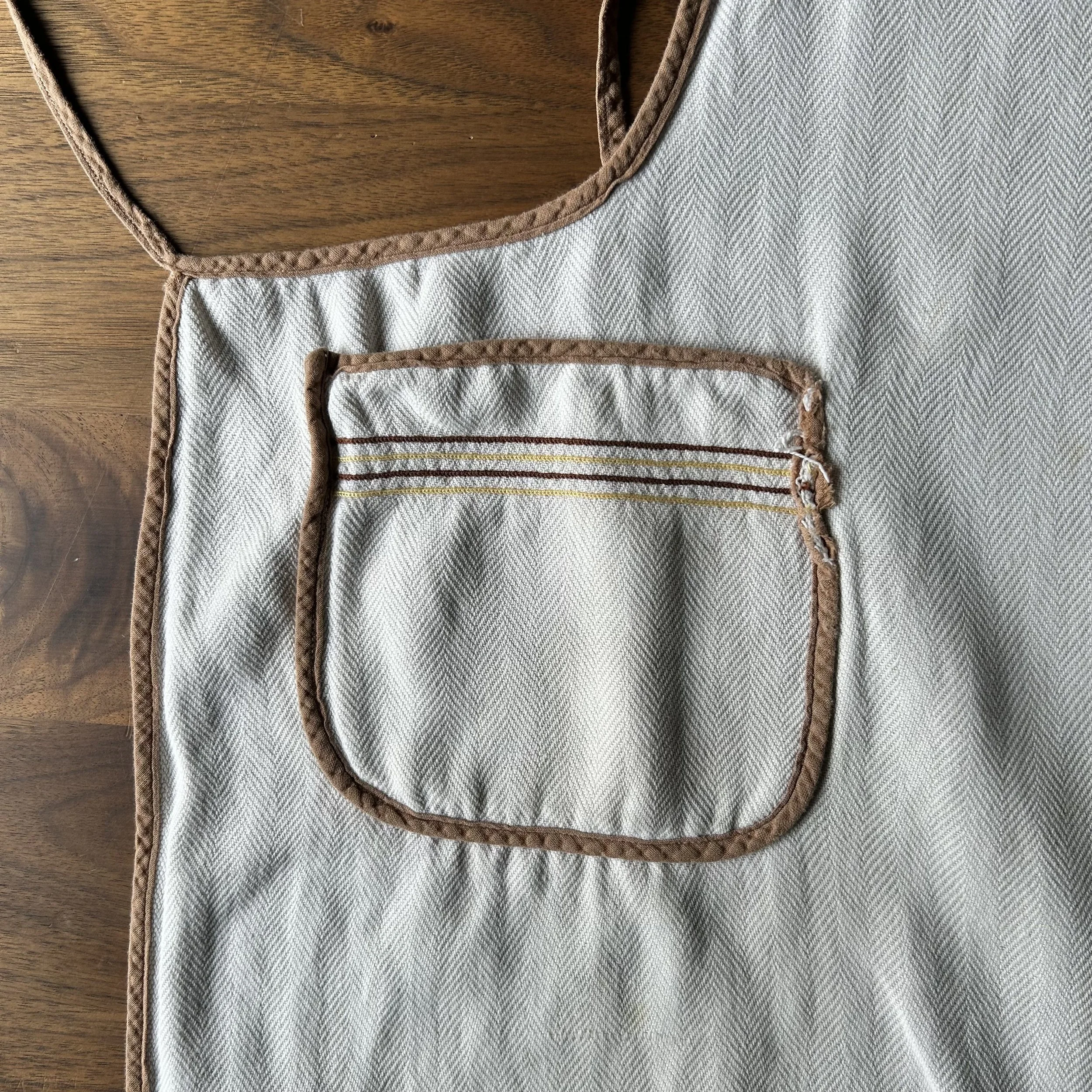
I think a grembiule quietly collects memories. It stands beside the stove while the sugo cooks. It gets covered in flour when pasta is rolled out. Children pull at it when they want attention. Someone dries wet hands on it without thinking.
And somehow, years later, you can pick up one of these old aprons and immediately remember the person who wore it. The way they cooked. The kitchen they cooked in. Maybe even the smell of something that was always on the stove. Recipes are passed from one generation to another, but I think gestures are passed down too. And sometimes all it takes is tying an old grembiule around your waist to bring some of those memories back. Maybe this is why I have never been able to throw these aprons away!
Does your grembiule have a story?
I started photographing some of the aprons I have collected from my family, and I would love to add other stories to them.
Maybe you have one that belonged to your mother or grandmother. One somebody made for you. One you bought on a trip and somehow always reach for. Or simply an old, stained apron that has been with you through hundreds of dinners. Old, new, elegant or very much not elegant — I would love to see it.
If you would like to share yours, send me a photo by email at info@gaiasplate.com, or by text or WhatsApp at 647-389-0514.
And if your apron has a story, I would love to hear that too — just a few words about who it belonged to, where it came from or why you keep reaching for it. With your permission, I would also love to share some of your photos and stories here on the blog and on the Gaia's Plate Instagram page.
Because sometimes the most ordinary objects in our kitchens are the ones that end up carrying the most stories.